Application of Plain-Text Authentication Policy to SOAP Web Service via Security Manager Provider
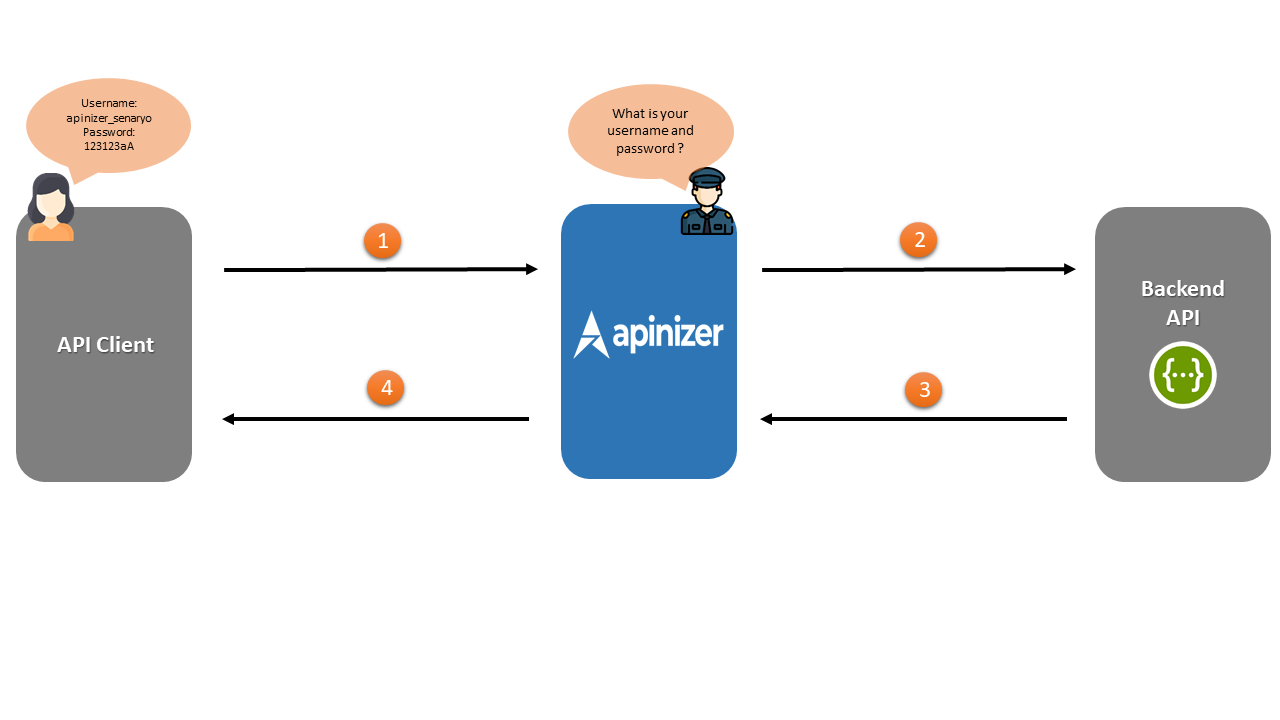
The numbering in the diagram below corresponds to the order of operations.
- Security Manager in Apinizer requests Plain-Text type authentication information from API Client. If this authentication information is correct, proceed to field number two.
- Apinizer makes a request to Backend API.
- Backend API responds to Apinizer.
- Apinizer responds to API Client.
Creating API Proxy
Access to the web service named Calculator can be provided from http://www.dneonline.com/calculator.asmx?WSDL.
First, this address must be defined as an API Proxy.
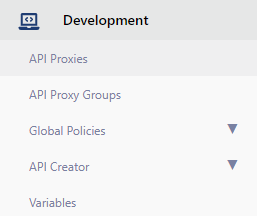
For this, click the API Proxies option under the Development menu.
Since no proxy definition has been made before on the opened page, the text No records found! appears.
Here, click the Create button in the top right corner and start creating a new proxy.

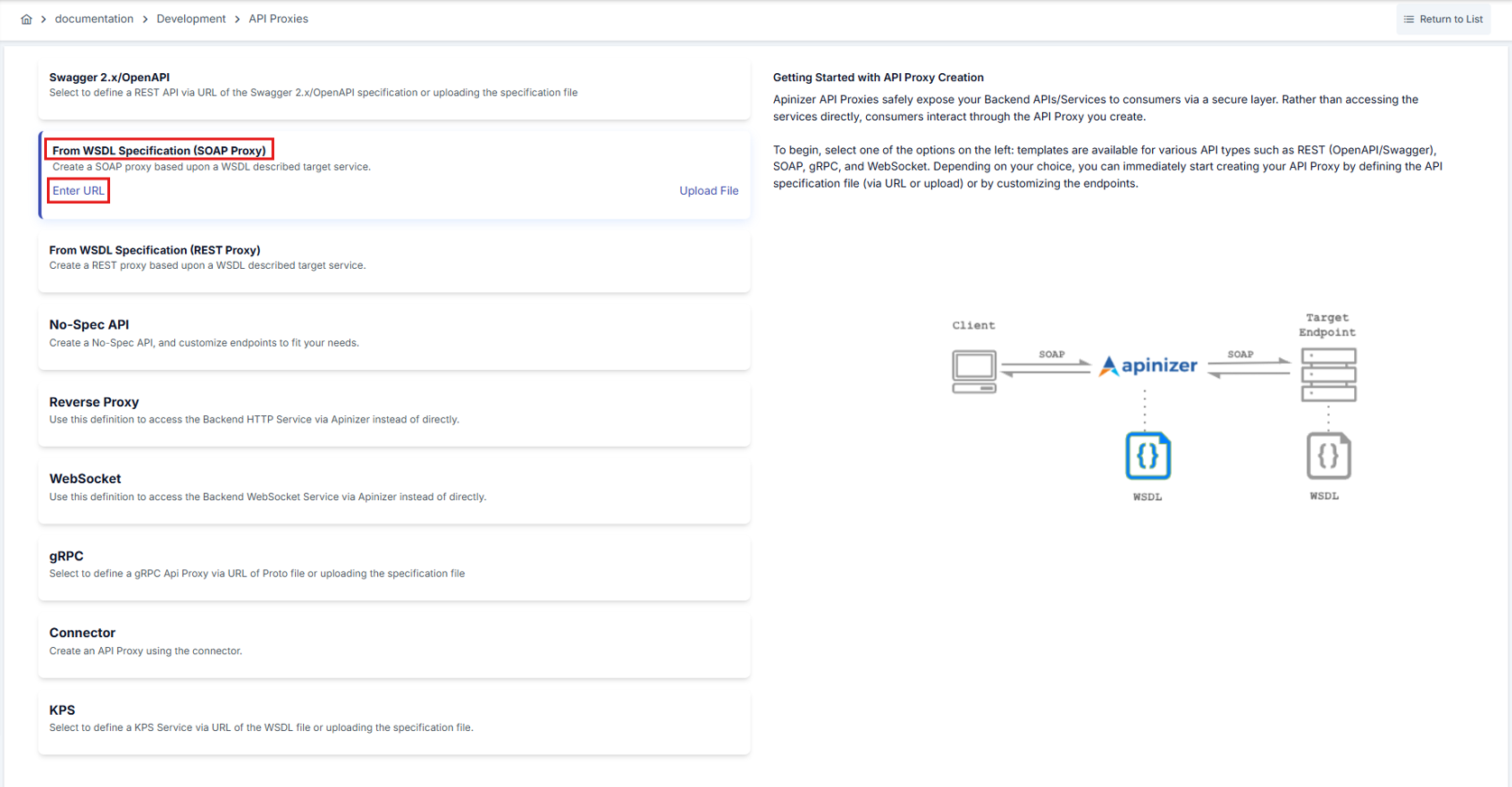
Since the API proxy to be added is a SOAP web service, click on the Enter URL expression from the WSDL menu to switch to the screen where the address of the web service to be used will be entered.
As seen in the image below, enter the address to be accessed in the URL section and click the Parse button.

After performing the parsing, the screen shown in the image below appears. Settings for the API Proxy can be made from this screen.
- The Usage field specifies who will use the created API Proxy. Options such as publisher, consumer, publisher and consumer are available here.
- There are two different options under the Protocol Transformation tab;
- Pass-Through SOAP allows the SOAP web service to be used as is without performing any transformation operations on the web service.
- REST to SOAP to REST allows this SOAP web service to be used in a structure that will include REST architecture.
- One or both of the two API addresses under the Addresses tab can be selected. If both addresses are selected, Apinizer will perform the Load Balance operation itself.
- Relative Path is the address where the created API Proxy will be opened for access.
- The Category List field also allows categorization of the created API Proxy.
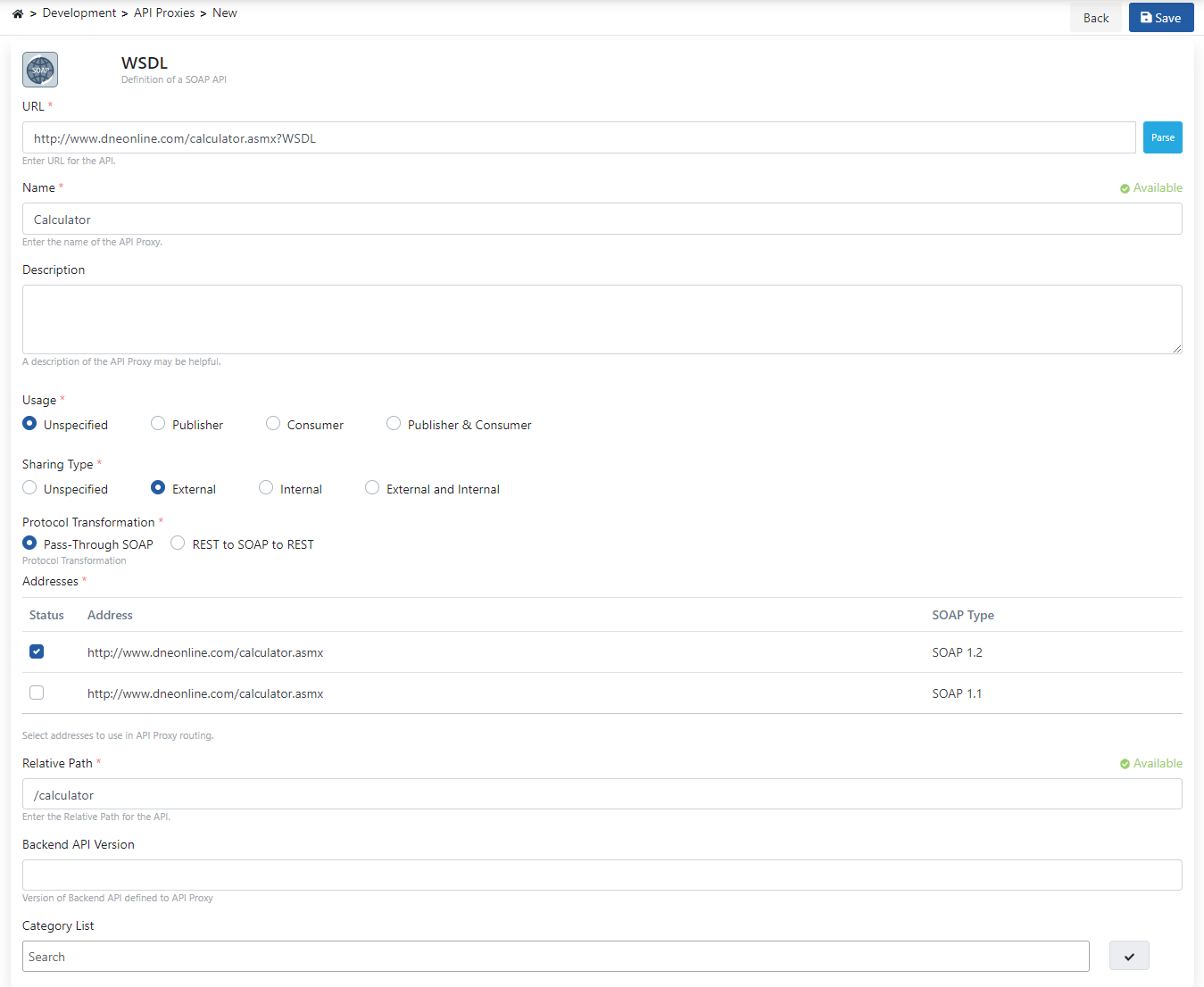
After these settings are made, the API Proxy is saved.
After the save operation, click the Develop tab on the opened page.
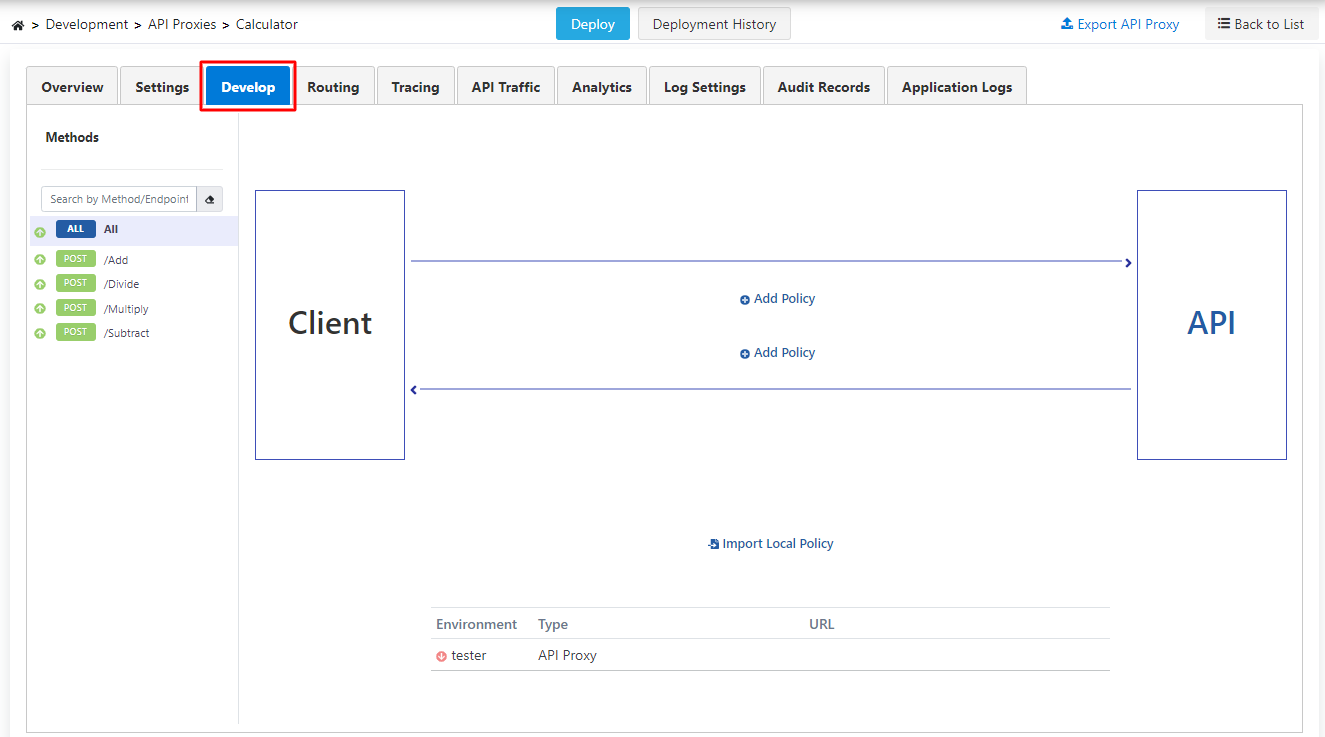
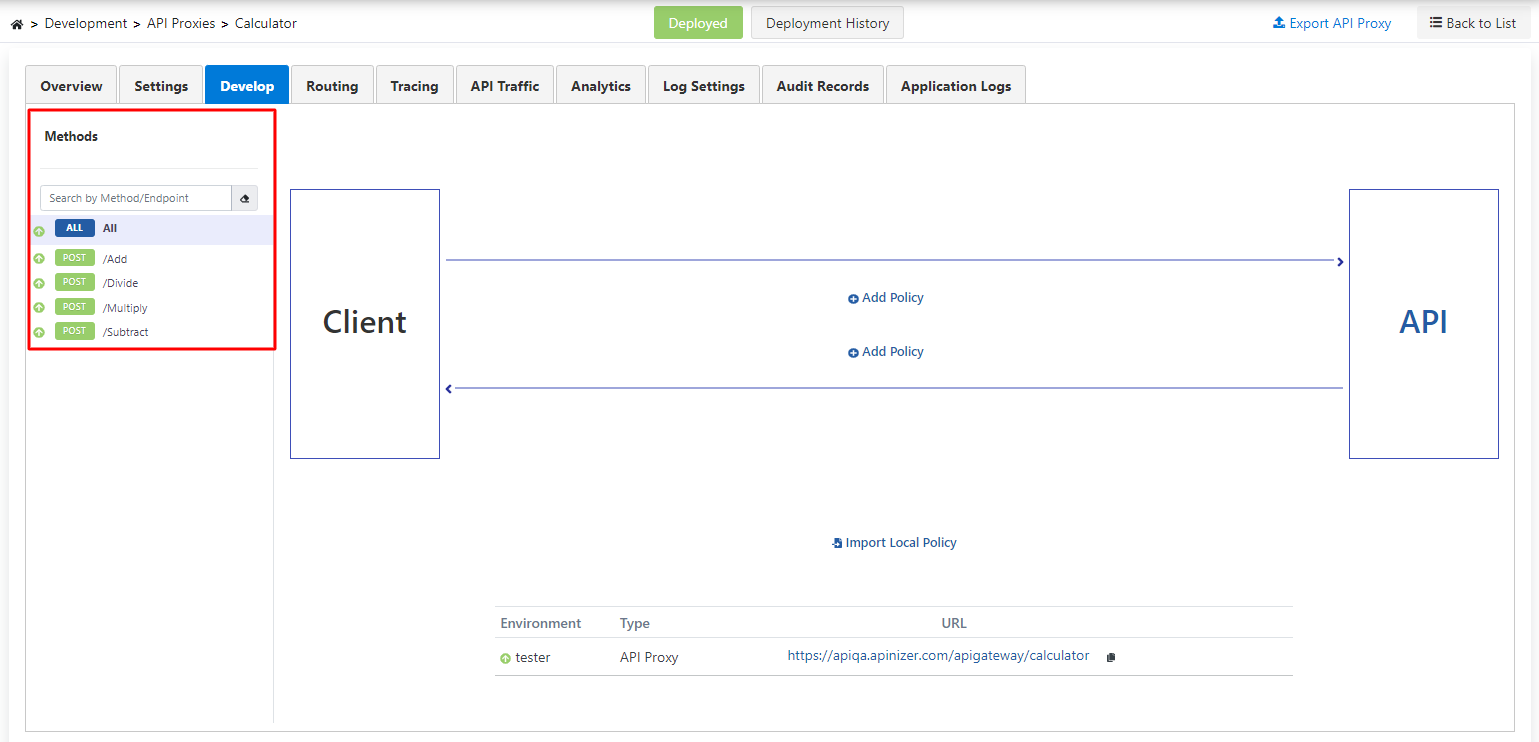
Here, the methods belonging to the web service are seen.
- Policies to be added with the All expression above these methods can be applied to all methods.
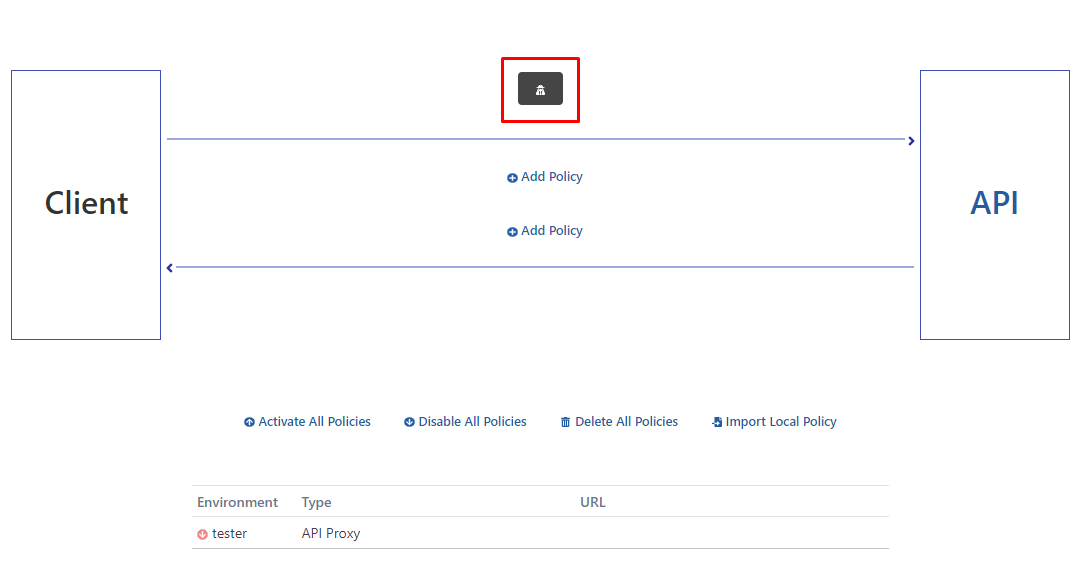
- The created API Proxy is deployed. For this, click the Deploy button in the middle section above.
Creating Consumers
The information for the Consumer to be added will be username = apinizer, password = 123123aA.
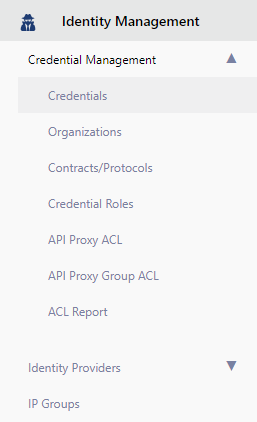
For this, go to the Identity Management menu.
Here, click the Consumers menu under the Consumer Management menu.
Click the Create button in the top right corner on the opened screen.

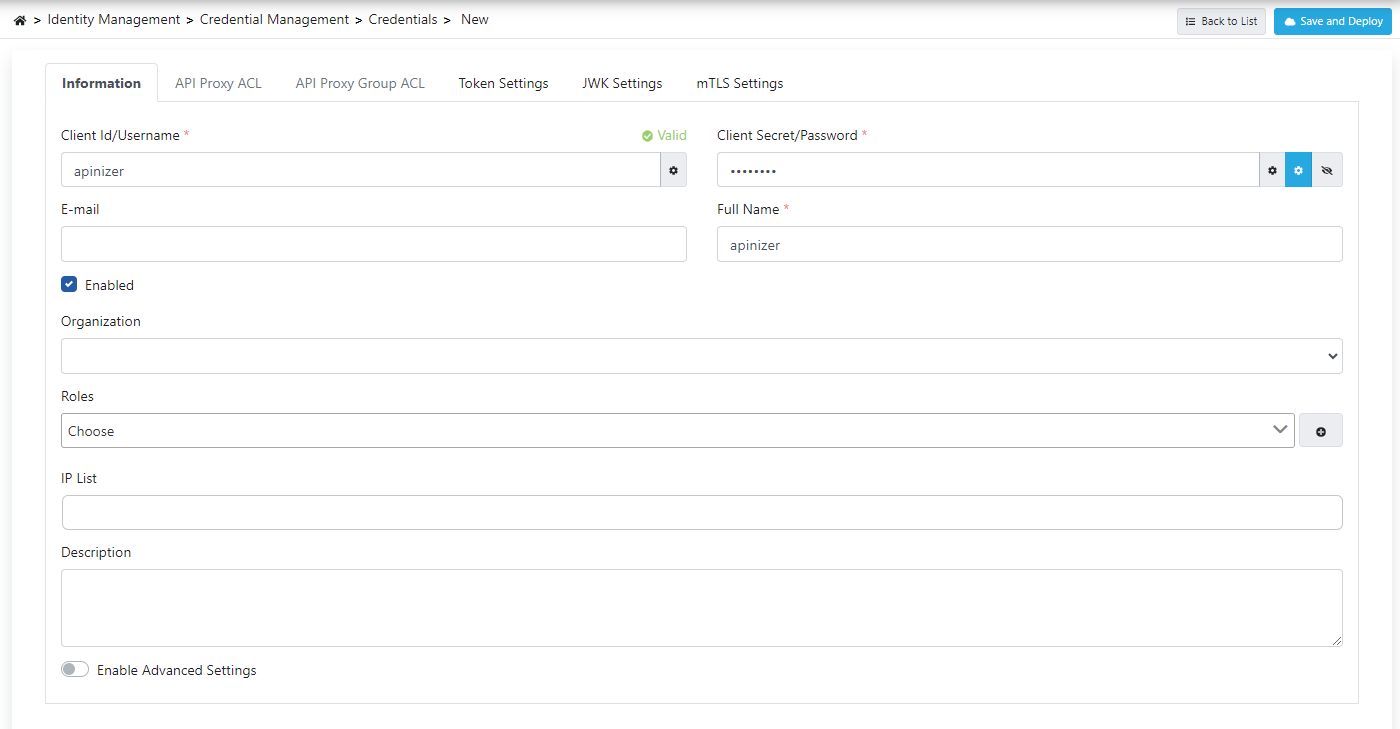
Here, the required fields are filled with the previously specified information and the created consumer is saved by clicking the Save and Deploy button.
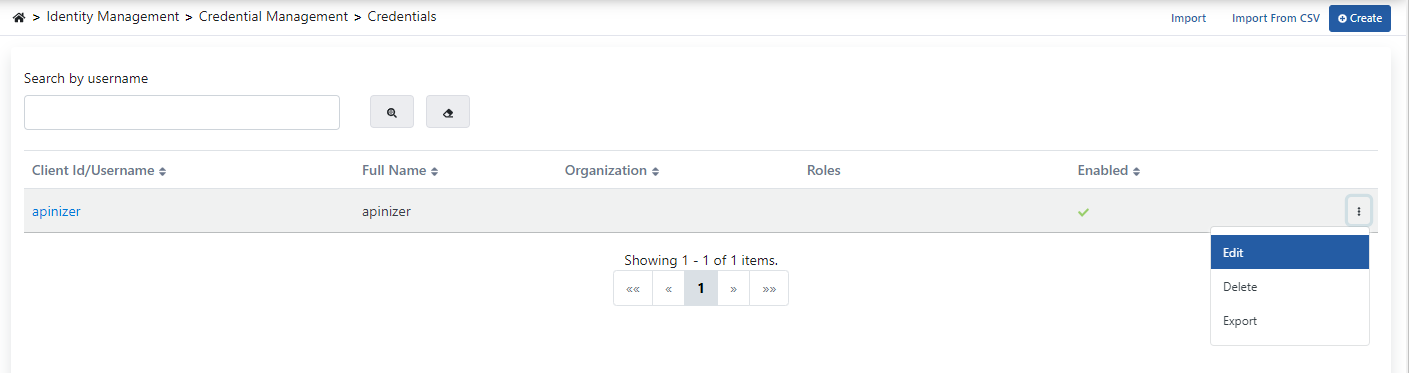
The proxy that this consumer element will provide access to must be selected. Hover over the created consumer and click the Edit option from the menu on the side.
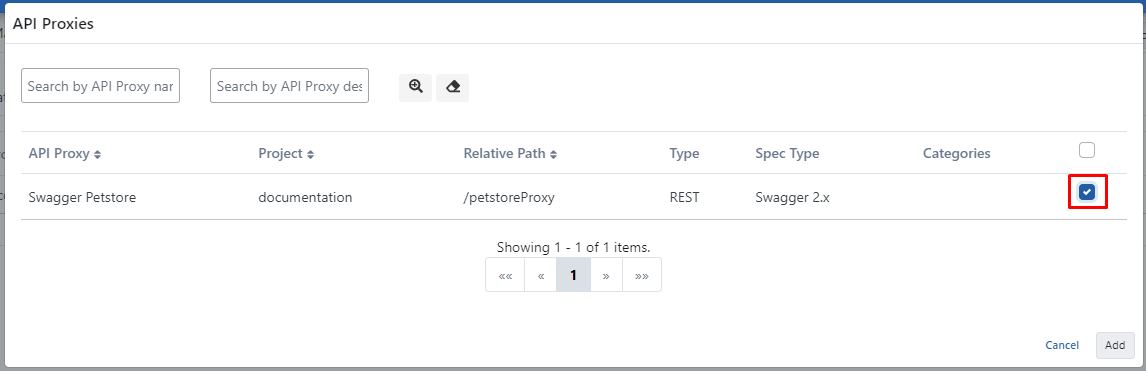
Click the API Proxy ACL tab from the opened screen, and click the button in this tab.

On the opened page, API Proxies in the project currently being worked on are listed. The proxy named Calculator is selected.
Click the Add button to specify that the created Consumer element will have access to this proxy.
Click the Save and Deploy button in the top right corner and save the operation.
Adding Authentication Policy
The Plain-Text Authentication policy can now be added.
Go to the page where API Proxies are listed and select the proxy named Calculator from here.
Then go to the Develop tab and click the Add Policy button.
On the opened page, the Plain-Text Authentication policy is selected.
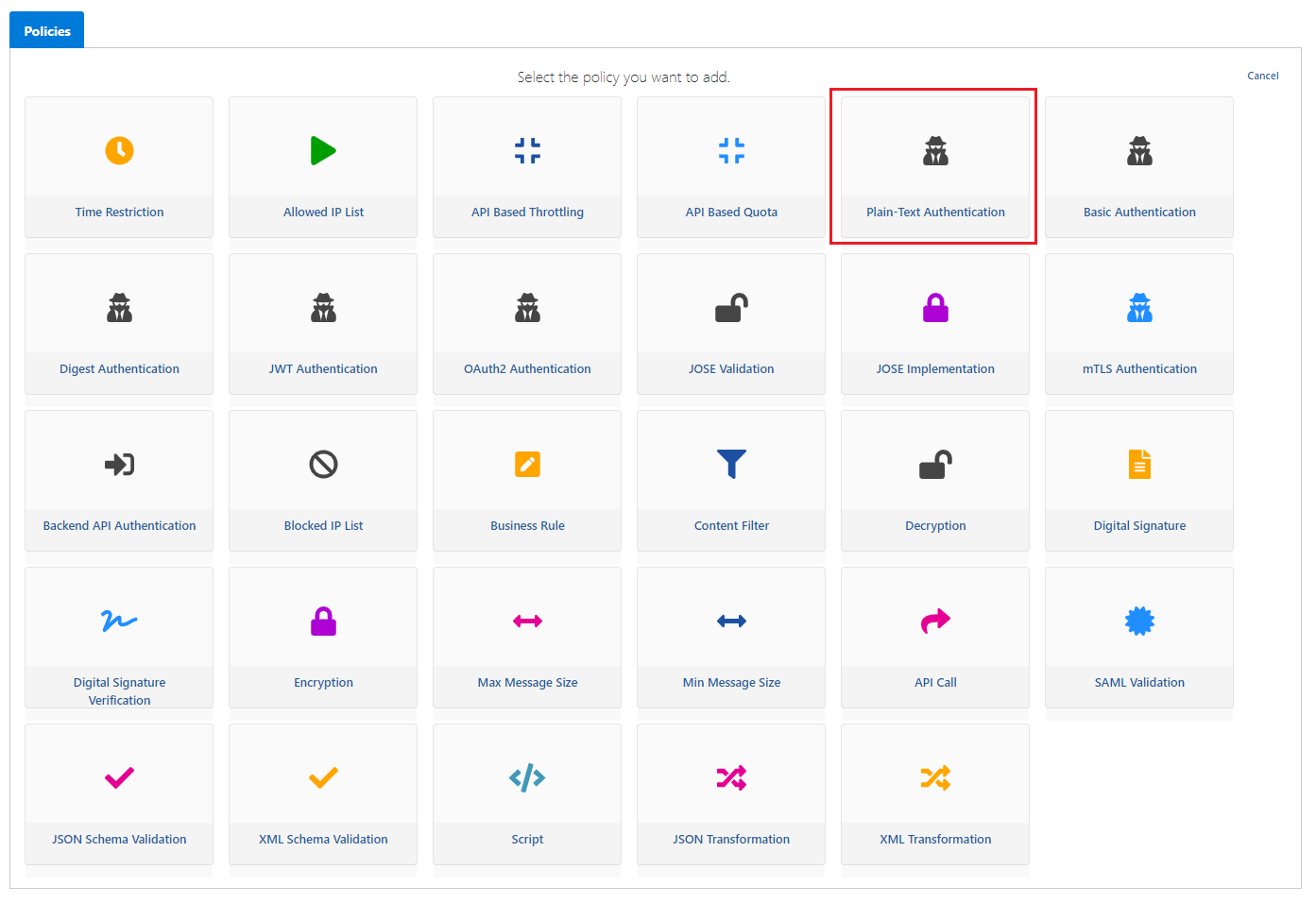
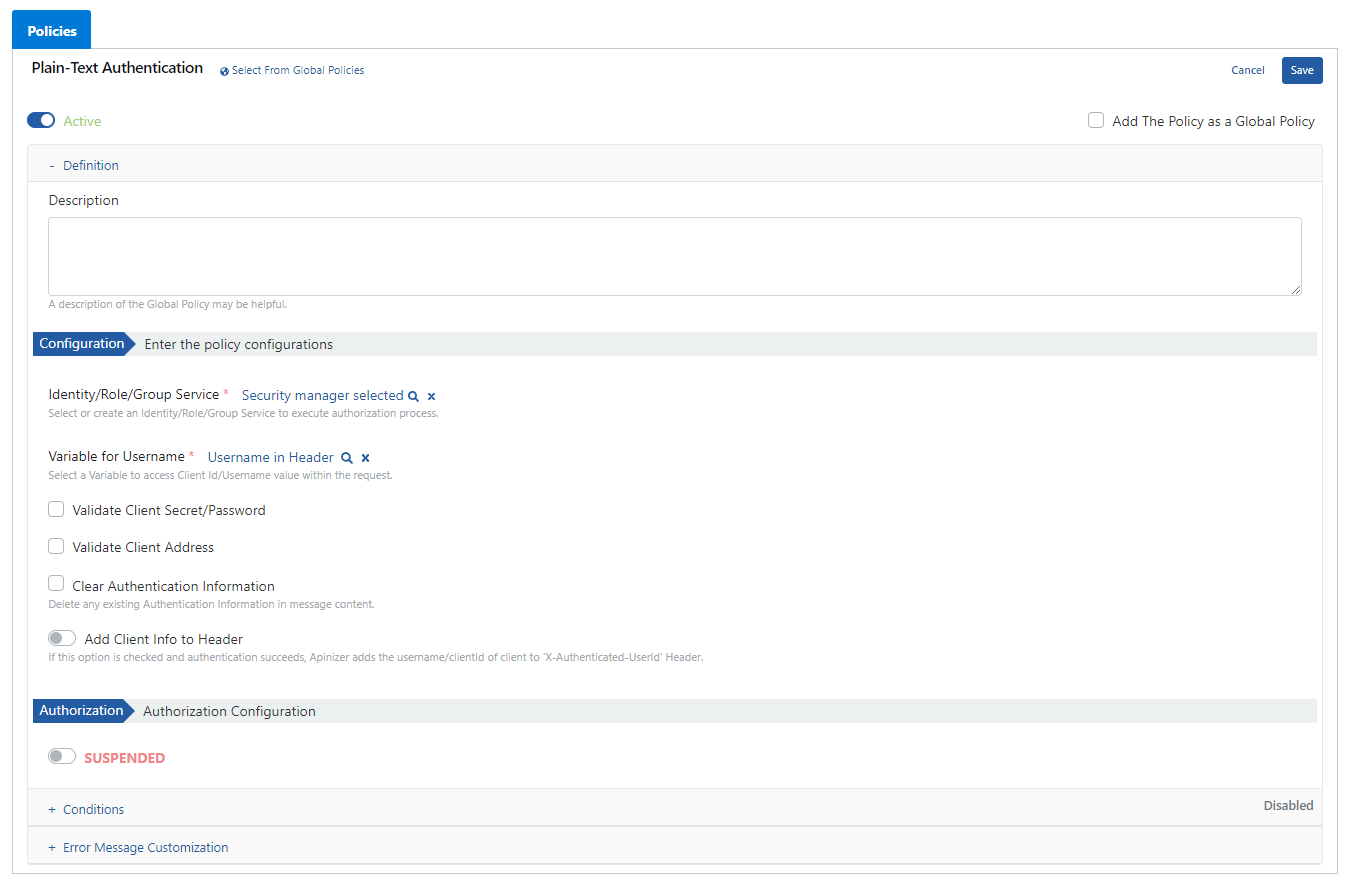
The fields on this screen:
- The value to be selected in the Identity/Role/Group Service field is the Security Manager value. Because credentials control will be performed by Security Manager.
- The Variable for username and variable for password expressions also select which variable the username and password information will be retrieved with. In this scenario, these values will be retrieved from header.
- If the Clear Authentication Information option is selected, authentication information in the incoming message is deleted.
- The Add Client Info To Header option specifies whether client information will be present in the Header going to the backend API.
- If this option becomes active, another parameter named Authenticated User Header Name appears.
- The X-Authenticated-UserId expression here specifies the header name with which the client information going to the backend API will go.
For the operation to be valid, the proxy must be Deployed.
Testing the API Proxy
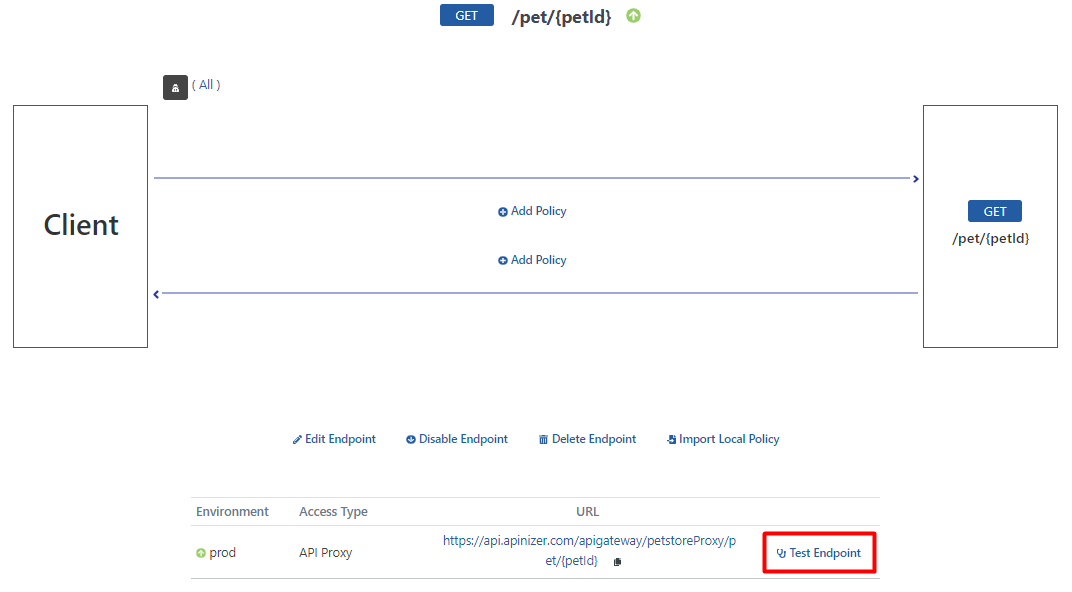
After selecting the Add method, click the Test Method button.
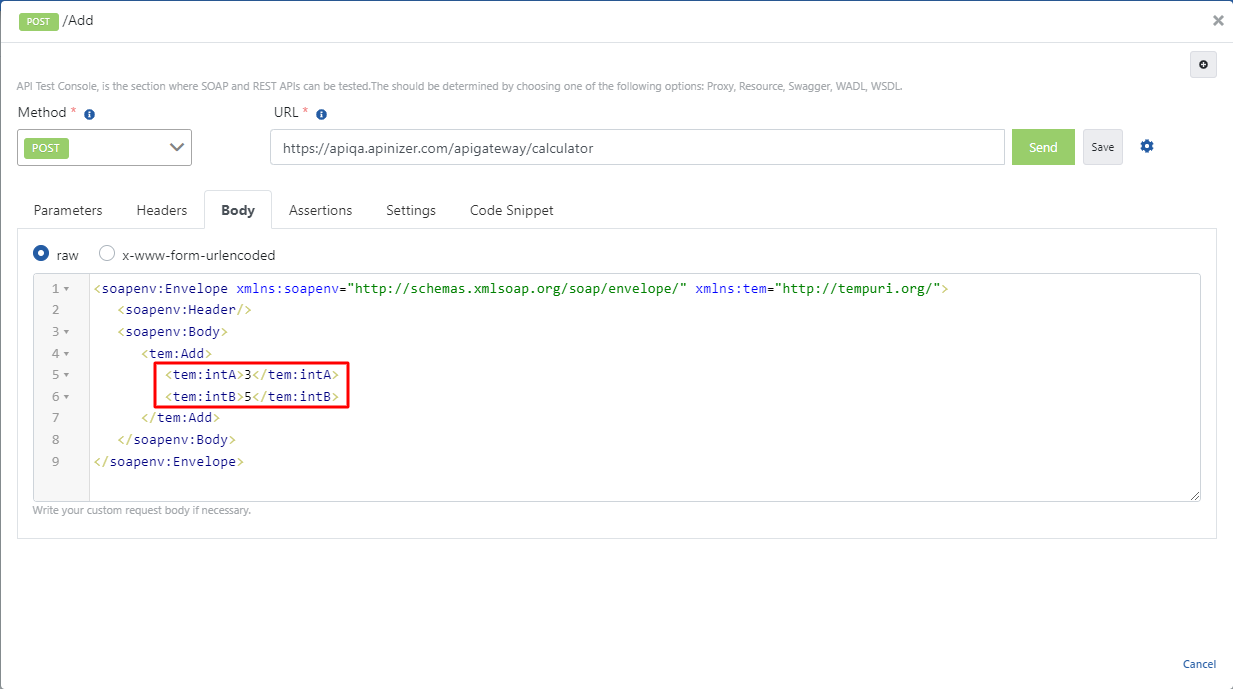
After writing the desired values in the Body, click the Send button and make a request to the backend API.
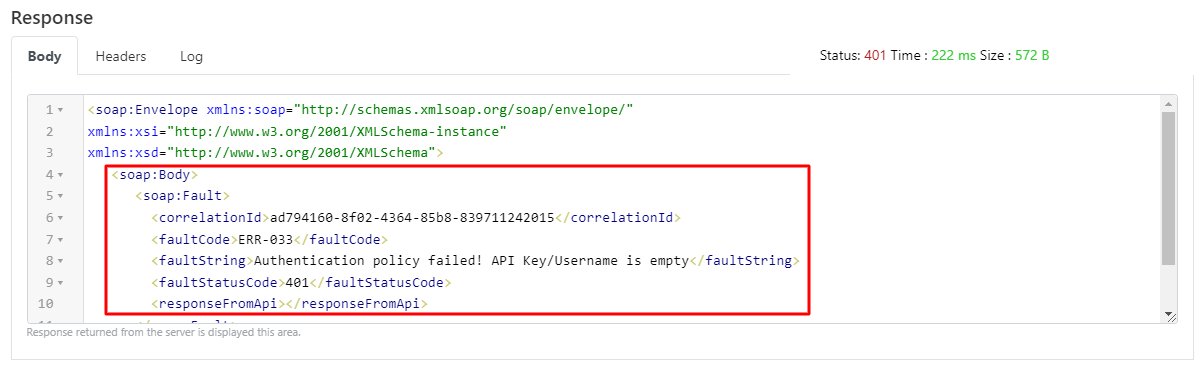
As seen in the image below, since no authentication information is sent to the backend API, the error message in the rectangle is received as a response.
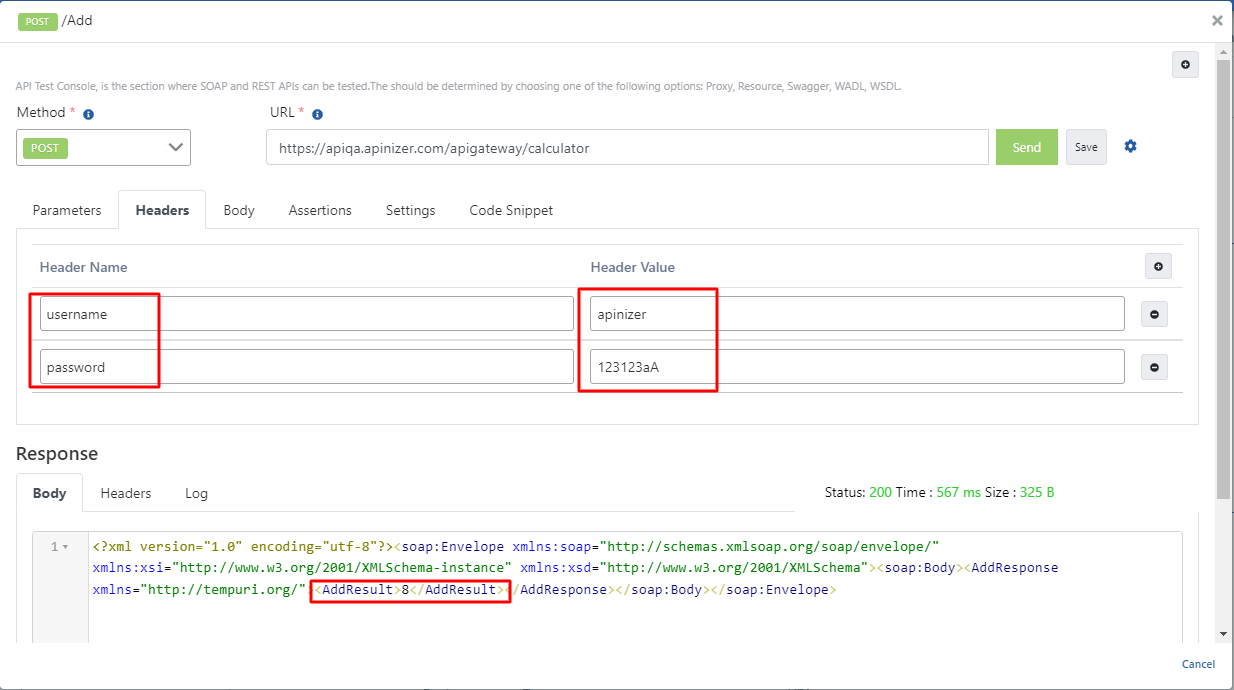
This time, enter username and password expressions in the header and repeat the test.
Enter the values username = apinizer, password = 123123aA in the headers to be sent to the Backend API.
When the Send button is clicked, a successful response is received.